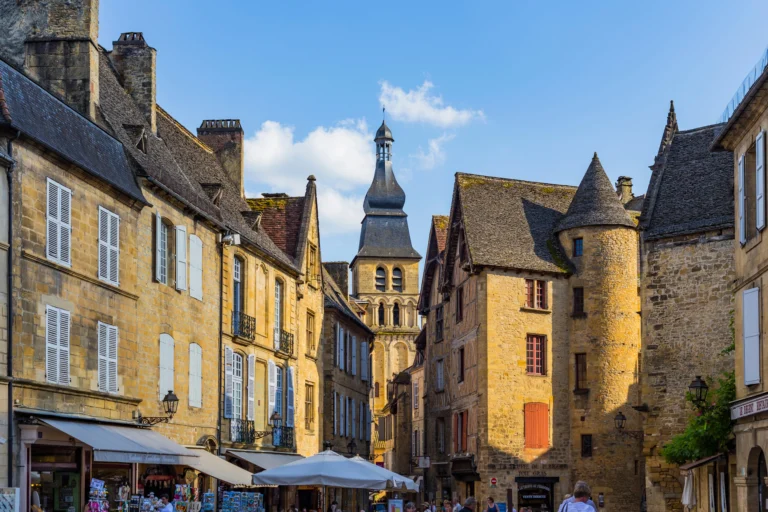
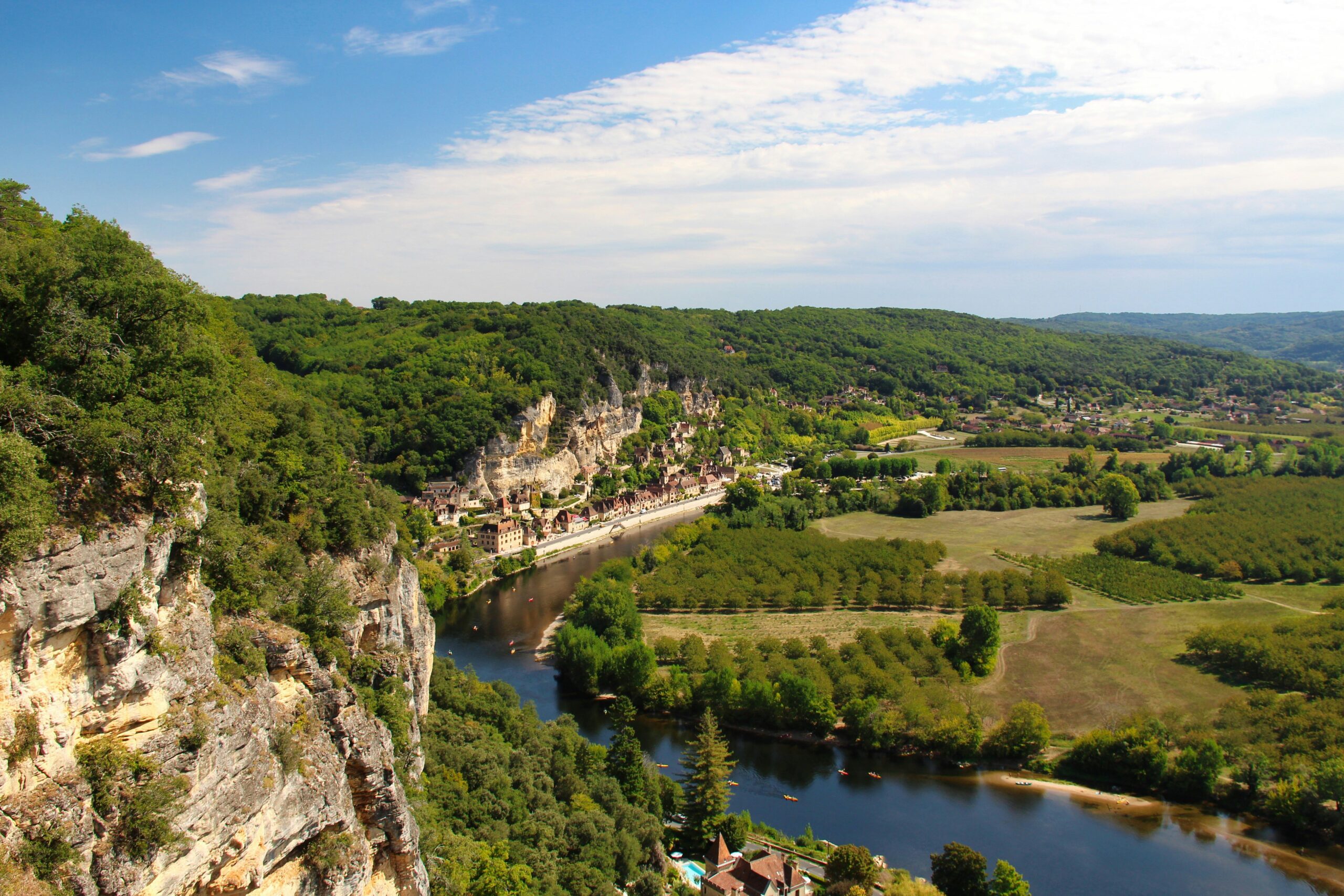
South West France, comprising the regions of Nouvelle-Aquitaine and Occitanie, which combined have 25 distinct departments, offers a diverse array of landscapes, from Atlantic beaches to the Pyrenees mountains, to the inland ancient oak forests of the Quercy, to the quintessential Dordogne riverbanks. Renowned for its rich history, vibrant culture, and world-class cuisine, the area is a popular destination if you are after adventure, relaxation, culture or anything in between.
France is divided into 18 regions, 13 of which are on mainland France. The regions are the largest territorial units in the country and serve to coordinate broad economic, infrastructural, and social programs. Each region contains multiple departments. There are 96 departments in mainland France.
South West France is made up of two administrative regions: Nouvelle-Aquitaine and Occitanie.
Nouvelle-Aquitaine
The Nouvelle-Aquitaine is the largest region of France, it is known for its diverse landscapes ranging from Atlantic beaches to the Pyrenees mountains and its vibrant cities like Bordeaux. It is a key economic hub, renowned for its wine production, aerospace industry, and rich cultural heritage.
The Nouvelle-Aquitaine is made up of 12 departments: The Gironde, the Dordogne, the Lot-et-Garonne, the Pyrenées-Atlantiques, the Landes, the Charente, the Charente-Maritime, the Deux-Sèvres, the Vienne, the Haute-Vienne, the Creuse and the Corrèze.
Our most northern properties are in the Dordogne region. You can see all of our properties on a map here.
We have given below a breakdown of the regions in which we have holiday villas, through the lens of their rivers, landscape and food:
Gironde (Capital: Bordeaux)
The Garonne River flows through Bordeaux, eventually forming the Gironde estuary. The landscape is known for its coastal dunes and vast pine forests in the Landes de Gascogne, alongside the famous vineyards of Bordeaux. The UNESCO world heritage site of St Emilion is well worth a visit when in the area, made a heritage site for it’s historical winemaking landscape.
Food and drink: Famous for Bordeaux wines, oysters from Arcachon Bay, and delicacies like canelés (small pastries with a caramelized crust and soft inside).
Click here for holiday rentals in the Gironde department
Dordogne (Capital: Périgueux)
Rivers: The Dordogne River meanders through valleys and picturesque medieval villages. Canoeing on any stretch of the Dordogne is a wonderful experience and we would highly recommend it to anyone staying in our properties. Because of the trade that once went up and down this large river, the houses on the Dordogne are magnificent, which makes for an interesting canoe.
Landscape: Rolling hills, prehistoric caves (such as the well known Lascaux caves), and scenic river valleys.
Food: Known for its foie gras, truffles, and walnuts, as well as hearty duck and goose dishes.
Click here for holiday rentals in the Dordogne department
Lot-et-Garonne (Capital: Agen)
Rivers: The Garonne River flows through the department, with its fertile plains.
Landscape: Green valleys, orchards, and medieval towns.
Food: Famous for Agen prunes, often used in desserts and savory dishes, and excellent local produce like peaches, tomatoes, and strawberries.
Click here for holiday rentals in the Lot-et-Garonne department
Landes (Capital: Mont-de-Marsan)
Landscape: Extensive pine forests, long sandy beaches along the Atlantic coast, and thermal spa towns.
Food: Specializes in foie gras, duck confit, and Chalosse beef, alongside seafood from the coast.
Click here for holiday rentals in the Landes department
Occitanie
Occitanie is one of France’s most geographically diverse regions, spanning from the Mediterranean coast to the Pyrenees mountains. Major rivers like the Garonne, Aude, Tarn, and Lot shape its rich agricultural lands and valleys. The region’s cuisine is renowned for its variety, with specialties such as cassoulet, foie gras, Roquefort cheese, and seafood from the Mediterranean. Its landscapes vary from coastal plains and rolling vineyards to dramatic mountain ranges, making it a region of remarkable natural and cultural diversity. It also has a rich historical history, including medieval sites like Carcassonne.
Occitanie is made up of 13 regions: the Tarn-et-garonne, the Ariège, Aude, Aveyron, Gard, Haute-Garonne, Gers, Hérault, Lot, Lozère, Hautes-Pyrénées, Pyrénées-Orientales and the Tarn
Ariège (Capital: Foix)
Rivers: The Ariège River flows through valleys from the Pyrenees mountains.
Landscape: Dominated by the Pyrenees with forests, deep valleys, and high-altitude pastures.
Food: Known for mountain cheeses like Bethmale and hearty dishes like garbure (a cabbage soup with ham and vegetables).
Click here for holiday rentals in the Ariège department
Aude (Capital: Carcassonne)
Rivers: The Aude River flows through this department from the Pyrenees to the Mediterranean.
Landscape: A mix of Mediterranean coastline, vineyards, and the fortified medieval city of Carcassonne.
Food: Famous for cassoulet, a slow-cooked stew of beans, duck, and sausage, and Corbières wine.
Click here for holiday rentals in the Aude department
Aveyron (Capital: Rodez)
Rivers: The Lot River and the Aveyron River wind through rugged gorges and hills.
Landscape: High plateaus (Causses), deep gorges, and pastoral lands.
Food: Known for Roquefort cheese, aligot (mashed potatoes with cheese), and saucisse d’Aveyron (pork sausages).
Click here for holiday rentals in the Aveyron department
Gard (Capital: Nîmes)
Rivers: The Gard River flows into the Rhône, with the Pont du Gard aqueduct being a key historical site.
Landscape: Mediterranean landscapes, vineyards, and olive groves, with Roman monuments in Nîmes.
Food: Renowned for brandade de morue (salted cod spread), Picholine olives, and wines from Costières de Nîmes.
Haute-Garonne (Capital: Toulouse)
Rivers: The Garonne River runs through the department, passing through Toulouse.
Landscape: Fertile plains, the Pyrenean foothills, and the bustling city of Toulouse.
Food: Famous for Toulouse sausages, cassoulet, and violet-flavored desserts. It’s also a center for duck confit and foie gras.
Click here for holiday rentals in the Haute-Garonne department
Gers (Capital: Auch)
Rivers: The Gers River meanders through gentle rolling hills and farmland.
Landscape: Known for its rural charm, rolling farmland, and sunflower fields.
Food: A hub for foie gras, Armagnac brandy, and confit de canard (duck confit).
Click here for holiday rentals in the Gers department
Hérault (Capital: Montpellier)
Rivers: The Hérault River and Orb River flow through the department to the Mediterranean.
Landscape: Mediterranean beaches, coastal lagoons, and vineyards, with lively cities like Montpellier.
Food: Famous for seafood, particularly oysters from the Étang de Thau, and local wines like Picpoul de Pinet.
Lot (Capital: Cahors)
Rivers: The Lot River carves deep valleys through limestone cliffs.
Landscape: Scenic river valleys, medieval towns, and limestone plateaus (Causses du Quercy).
Food: Known for Cahors wine (Malbec), truffles, and Quercy lamb.
Click here for holiday rentals in the Lot department
Lozère (Capital: Mende)
Rivers: The Lot and Tarn Rivers run through rugged gorges and high plateaus.
Landscape: Wild and remote, featuring the Cevennes mountains and vast plateaus (Causses).
Food: Specializes in pork dishes, local lamb, and cheeses like Bleu des Causses.
Hautes-Pyrénées (Capital: Tarbes)
Rivers: The Adour River originates in the Pyrenees, flowing through valleys.
Landscape: The towering Pyrenees mountains, with deep valleys, waterfalls, and ski resorts like Lourdes and Cauterets.
Food: Known for mountain specialties, including garbure, black pork, and sheep’s milk cheese.
Pyrénées-Orientales (Capital: Perpignan)
Rivers: The Têt River and the Tech River flow from the Pyrenees to the Mediterranean.
Landscape: A mix of Mediterranean coastline, vineyards, and the rugged Pyrenees mountains.
Food: Known for Catalan cuisine, featuring paella, anchovies from Collioure, and Roussillon wines.
Tarn (Capital: Albi)
Rivers: The Tarn River flows through the department’s valleys and historic towns.
Landscape: Rolling hills, vineyards, and red-brick towns like Albi, famous for its medieval architecture.
Food: Known for Gaillac wines, charcuterie (especially dry-cured ham), and le aligot, a creamy mashed potato dish with cheese.
Tarn-et-Garonne (Capital: Montauban)
Rivers: The Tarn River and the Garonne River converge, creating fertile agricultural lands.
Landscape: Green valleys, orchards, and fertile plains around the river basins.
Food: Famous for chasselas grapes, melons, and duck-based cuisine like magret de canard.
In 2016, there was a change to the administrative structure across france. Nouvelle-Aquitaine is made up of the old departments of Aquitaine, the Limousin and the Poitou-Charentes. Occitanie is made up of the Midi-Pyrénées and the Languedoc-Roussillon. You might still occasionally come across these areas being referred to under their old regional structure names.
We are specialist in holiday rentals in South West France, if you would like any recommendations, or to have a conversation about the merits of holidaying in South West France do get in touch.